NT2 · Integration · Organisations

Your international professionals speak Dutch. But do they function in Dutch? I make that happen.

Professionally excellent, motivated, ready to contribute. But goodwill alone gets nobody through a team meeting, a performance review, or the corridor conversations where the real decisions are made. I organise the shortest route: intensive Dutch (NT2) programmes where language, professional communication and the unwritten rules of the Dutch workplace come together.

01The problem

Integration rarely fails on het and de

A standard language course teaches someone the language. But not how a Dutch team meeting works. Not why feedback here sounds so blunt, or what goes unsaid in a performance review. And not how you build authority as a professional in a culture that distrusts hierarchy.

Anyone who does not learn that stays an outsider, however good the Dutch becomes. And after eighteen months an expensive, scarce professional leaves. Not because they disliked the work, but because the working did not work.

02Offer

Integration is a two-way street.

A professional can learn the language. But lasting performance emerges only when the working environment also understands what that takes. That is why I work on both sides.

Track 1
For the internationally trained professional

Working in Dutch

Not a general NT2 course, but language and culture at the level of the profession: meetings, presenting, reporting, dealing with patients, parents or clients, and the unwritten rules of the Dutch workplace. Intensive, tailored, and tied directly to the daily practice of this professional in this organisation.

Track 2
For the organisation

Language-aware collaboration

Integration stalls on the receiving side just as often. I guide Dutch teams and managers in two things: understanding how language acquisition works in the workplace, and therefore how to support a colleague effectively rather than spare them; and recognising and using cultural differences. So that international colleagues are not merely onboarded, but genuinely start contributing.

03What the team gains
Thinking has a form, and that form is language.

Language makes taking part possible. Anyone who thinks in more than one language brings other experiences, perspectives and distinctions, but that added value emerges only when someone can join the conversation where ideas are formed and decisions are made.

A team that learns to work with those differences sees more: assumptions that otherwise stay invisible because its own language makes them self-evident, questions that turn a meeting, solutions that would not otherwise arise.

The yield of a good programme is therefore not only a colleague who contributes, but a team that thinks better.

04Who it is for

For organisations that need international talent and want to keep it

I work with organisations where international professionals matter: in healthcare, IT, engineering, education, childcare and elsewhere. The sectors differ, the pattern does not: skilled people who get stuck on the last, invisible mile between language proficiency and full professional functioning.

05How it works

Tailored yet structured

Every programme begins with an intake, with the professional and with the organisation: what is the issue exactly, what will look different in three months, and who needs to move along? On that basis follows a concrete proposal: content, scope, duration and investment.

I never work with the professional alone. In every programme the team is involved, because colleagues who understand how language acquisition works, what does and does not help, and how to support a colleague without taking over, make the difference between someone who stays engaged and someone who drops out. The balance differs per programme; the involvement does not.

Tailored does not mean everything stays vague. Below are the three forms my programmes usually take, with an honest range for the investment.

01

In-depth programme

For professionals who already function in Dutch but remain stuck on the last mile: from correct to natural, from intelligible to convincing. Nuanced conversations with clients, patients, parents or customers; tone and timing in meetings; the unwritten rules of feedback and authority. For the team: a working session on how to support an advanced language learner, when to correct, when to let it go, and how to give room without sparing.

Entry level: B2+ · Scope: approx. 20 sessions of 90 minutes · Duration: 10-12 weeks · Investment: € 2,500 - € 3,500 per participant
02

Intensive integration programme

For professionals who have mastered the language but still have to conquer working in Dutch: professional vocabulary, reporting, presenting, and the Dutch culture of consultation. For the team: two to three workshops on cultural and linguistic collaboration in the workplace, covering how language functions under pressure, how to communicate intelligibly without oversimplifying, and how differences become working capital rather than noise.

Entry level: B1-B2 · Scope: approx. 40 sessions · Duration: 5-6 months · Investment: € 5,000 - € 7,500 per participant
03

Accelerated integration programme

For professionals who need to be fully operational quickly. Full immersion: language, professional communication and coaching aimed at functioning directly in practice. The team learns in parallel; both change, and that is the intention. Where relevant: preparation for sector-specific registrations or assessments.

Entry level: from B1 · Scope: 60-80 sessions · Duration: 3-4 months · Investment: € 10,000 - € 15,000 per participant

Also possible: group programme

Supporting several international professionals at once? A group programme combines group lessons with individual coaching and integration sessions for the team. 4-6 participants, lower investment per professional, and extra exchange and recognition within the group.

Investment: € 4,000 - € 6,000 per participant

Prices are per programme around one professional, including the team component. I am a certified NT2 teacher, which is relevant for organisations working with subsidy schemes for language training.

What do those language levels mean?

The European levels (A1 to C2) give a reliable picture of general language proficiency, from simple conversations (A2) through independent functioning (B1/B2) to near-native level (C1/C2). But in the workplace language is judged along two other axes: the informal, idiomatic register of the coffee machine, and the specialist language of the profession. That is where the misunderstandings arise. Someone who falters in small talk is soon underestimated professionally as well, and conversely, someone with excellent general Dutch may still fall short on professional vocabulary. The entry level above is therefore a point of orientation, not a verdict: the intake maps out what is needed on which axis.

06From practice

Case examples

Language is rarely the only problem.

These examples show how language, professional communication and organisational culture influence one another. The situations differ. The underlying pattern does not.

HR

Too quickly into Dutch

An ambitious Ukrainian communications officer worked in English and was learning Dutch alongside it. As soon as she reached B1, colleagues switched entirely to Dutch in meetings and in the breaks. Well meant, but too early for B1, certainly for someone using English as a second language too. The frustration rose so high that she was on the verge of leaving. With management we established what B1 means in practice, agreed fixed Dutch-language moments, appointed two colleagues as language buddies, and agreed explicitly that switching back to English remained possible at any time, without comment. She was able to grow to B2. And she stayed.

IT

C2 is not the answer

An IT company sought help with a vacancy and demanded C2, the highest language level there is. I explained that my own teaching qualification is based on C1. That changed the conversation. No longer which CEFR level someone had to have, but which language acts a professional at B2 still needed to develop. It turned out to be mainly about client conversations, and that calls for conversational technique as much as language training. The C2 requirement disappeared; clarity took its place.

Engineering

Fluent is not always enough

A technician, socially skilled and highly communicative, was promoted and got stuck. Nobody had noticed that his vocabulary was actually too limited. He commanded the idiom, made jokes effortlessly and, musical as he was, hit exactly the right intonation. Everyone heard fluent Dutch. At his new level, with reports, meetings and more abstract conversations, that proved insufficient. We mapped the gap and developed an individual programme using material from his own work: the shortest route from sounding fluent to functioning professionally.

Education

A B2 course was not enough

A mathematics teacher was working as a classroom assistant. The school had sent her to a generic B2 course, because that was required for her teaching qualification. But language was not the only thing standing between her and teaching. We paired her with another international teacher, not for the language, but for the unwritten workings of the Dutch education system, explained by someone who had travelled the same route herself. So she learned in parallel, and faster.

Childcare

Parent conversations are culture too

A well-educated, committed woman wanted nothing more than to work in childcare, but failed her probation period time after time. She saw discrimination as the cause. In conversation with her last employer something else emerged: nobody had ever explained to her how Dutch parent conversations proceed, or which cultural expectations play a part in them. The outcome was not only coaching for her, but a workshop for the whole staff. Because the children in the group came from all corners of the world too.

Healthcare

A smile is not a diagnosis

With the Eastern European healthcare professionals I support, we regularly discuss how patients present themselves, here and in their country of origin. In many Eastern European countries a patient wants to remain dignified: you smile, even when you are in a lot of pain. In the Netherlands the severity of a complaint is often read precisely from how someone expresses it. International healthcare professionals therefore learn not only the Dutch codes. They also bring knowledge that helps their Dutch colleagues understand patients better.

07About me
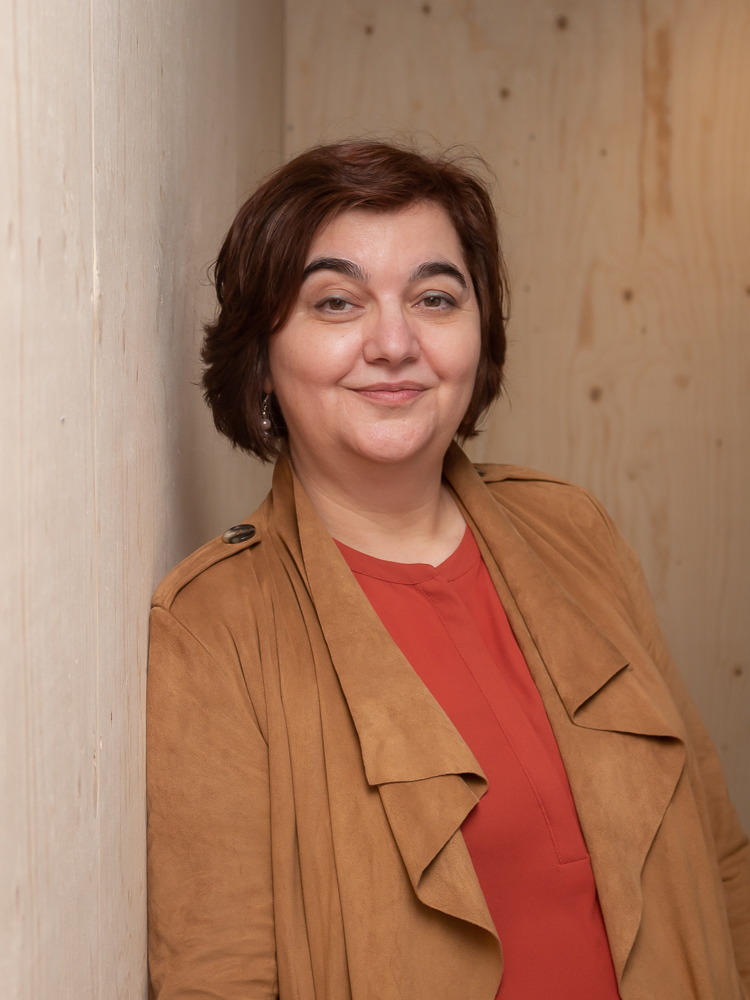
Margarita Jeliazkova

Why organisations work with me

I am Margarita Jeliazkova. For more than thirty years I have worked at the intersection of language, thinking and organisational culture, as a certified NT2 teacher, trainer and researcher, with a background in philosophy and policy science.

I have done myself what I ask of international professionals: built a professional life in a new language, within Dutch institutions and across cultural distance. Not only as a teacher and researcher, but also as a municipal councillor and supervisory board member.

That combination of experience shapes the way I work. I know the language of the shop floor, but also the language of organisations and governance.

For professionals from Ukraine and the wider East of Europe I work, where it helps, with Russian and Bulgarian as support languages, and with Polish, Ukrainian and German where useful. As a migrant in the Netherlands I also recognise the questions that arise when self-evident rules suddenly stop being self-evident.

So I know not only that it can be done, but also where it usually chafes, and how professionals and organisations get through it together.